


Automatic Honeycomb Paper Machine: Tube Loading and Winding
2026-10-21 10:59For buyers comparing honeycomb paper converting equipment, “fully automatic” should lead to a discussion about specific machine functions. The useful question is what the supplied equipment does during preparation, winding and finished-roll handling, and which tasks remain with an operator. FOUNDPAK’s fully automatic honeycomb paper making machine lists functions that allow this discussion to move beyond a general automation label.
Start with the identified machine configuration
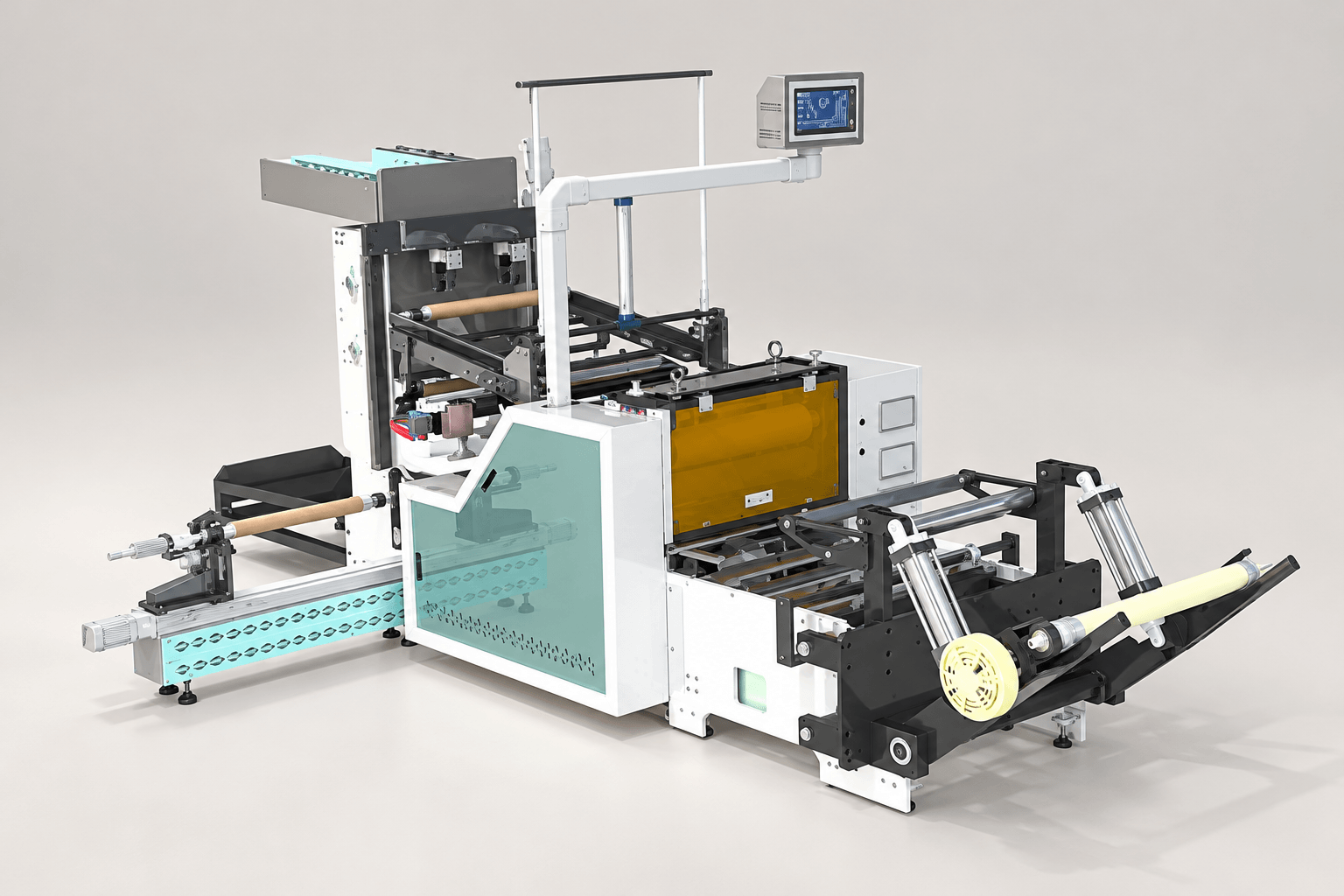
The official fully automatic honeycomb paper machine page lists an effective unwind width of 540 mm and an effective die-cutting width of 550 mm. It also identifies a helical-tooth die-cutting roll, a servo-driven bottom roller, variable-frequency speed regulation and automatic deviation correction.
Keep these descriptions tied to that product page when requesting a quotation. Ask the supplier to identify the exact machine configuration being offered and mark its modules on a drawing. Similar names elsewhere in a product range should not be treated as proof that every configuration has identical hardware, automation or dimensions.
This equipment discussion concerns converting paper for expandable honeycomb cushioning applications. A project involving rigid honeycomb board or a machine that makes finished padded envelopes needs its own equipment specification.
Map the listed automation functions
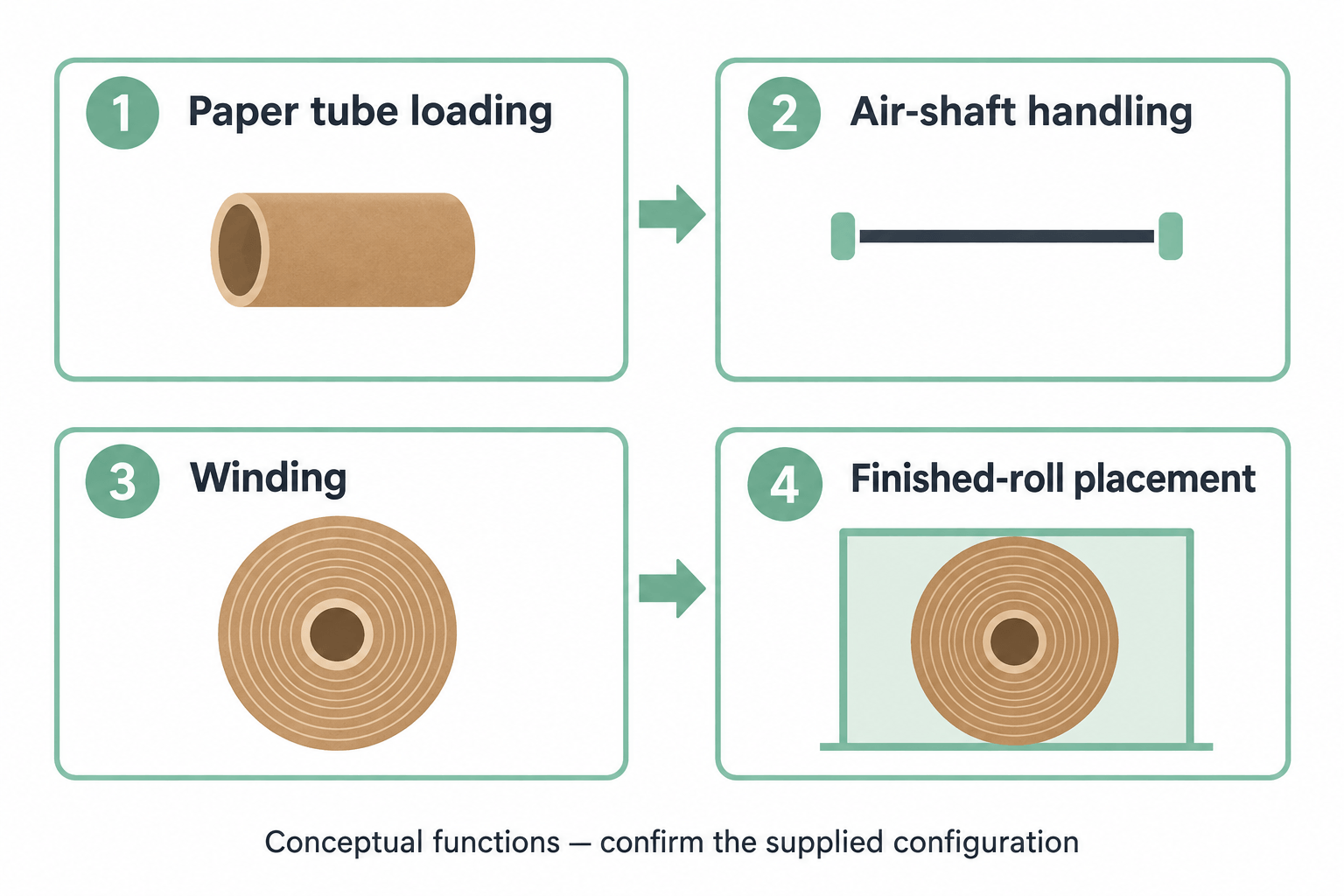
Under its automatic tube-loading entry, FOUNDPAK lists paper-tube loading, inflatable-shaft loading, inflation, shaft placement, winding and finished-product placement. The table also identifies friction winding. These are the published function descriptions, rather than a complete description of the supplied operating cycle.
Ask how the quoted machine links these functions. Which steps start automatically, what does the operator prepare, and where is the finished roll presented? Request identification of the supplied loading and collection arrangements. This establishes an agreed automation boundary without assuming an unlisted robot, magazine capacity or continuous roll-change system.
Ask the supplier to demonstrate the complete winding cycle
A machine demonstration should make the handling sequence visible, not only show a roll turning. Ask FOUNDPAK to demonstrate preparation, tube and shaft handling, the agreed winding operation and finished-roll placement using the proposed configuration. Record where operator actions are required and what information appears at the controls.
Include a discussion of how the required roll format is selected. Ask which changes are adjustments and which require additional components. Where several formats are planned, request a quotation that identifies each agreed setup. Do not assume that an automatic function for one configuration covers every tube size or winding requirement.
The webpage lists a running-speed range of 5–280 m/min. This is a machine speed entry, not a stated number of saleable rolls per hour. Source: official equipment parameters. Ask for a project demonstration that records both running conditions and handling interruptions before agreeing an output expectation.
Separate correction, winding and collection questions
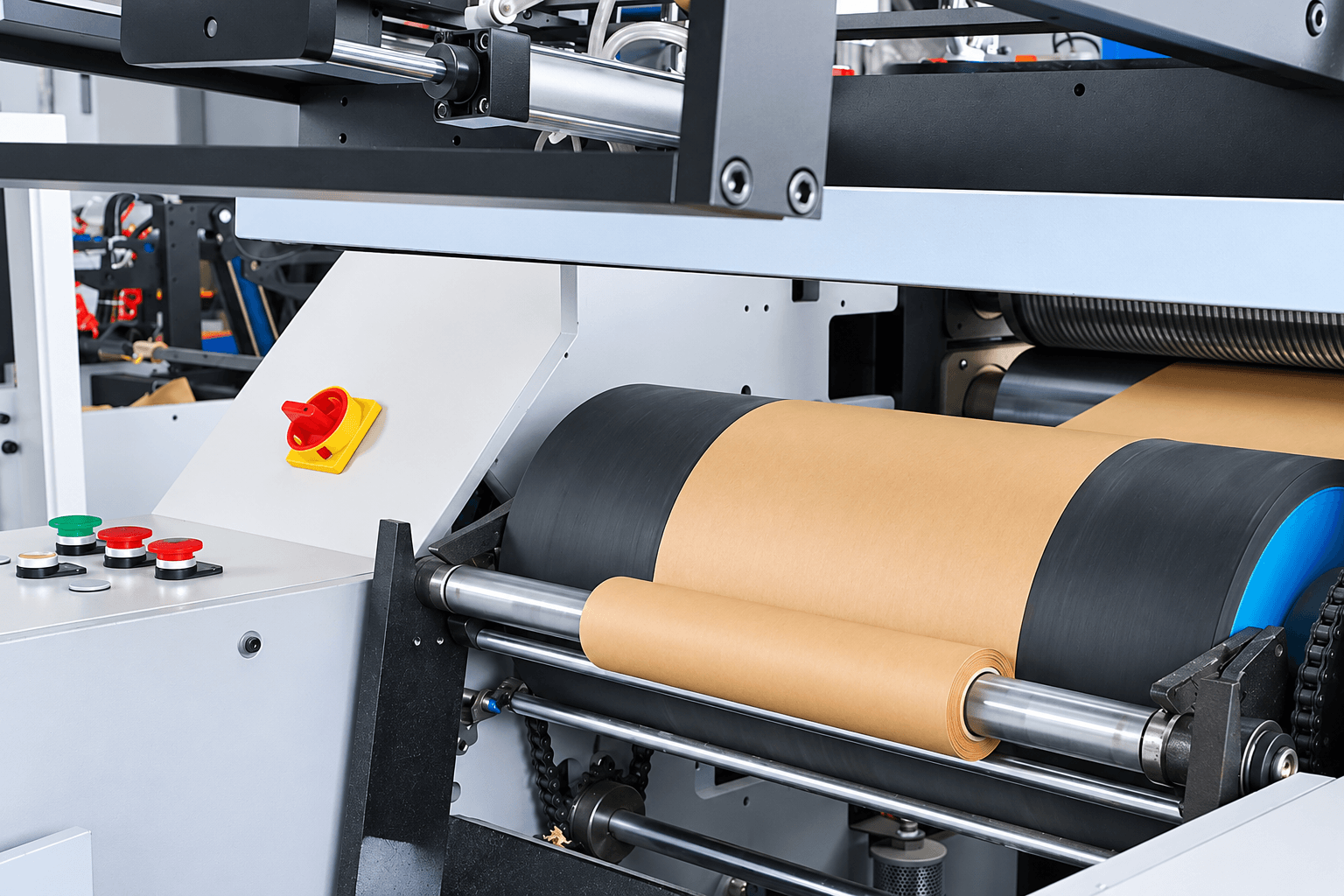
For the listed deviation-correction system, ask the supplier to explain its function and demonstrate the relevant operator settings. Obtain the documentation for the supplied equipment rather than relying on a general explanation of web guiding. The same approach applies to the winding unit: identify its supplied arrangement and the settings available to the operator.
For collection, agree the equipment boundary. Ask whether the quotation includes only the listed finished-product placement or additional handling equipment. Describe how completed rolls will move to the next operation and request confirmation of any proposed interface. Collection requirements deserve attention even when the main interest is automatic tube loading.
Resolve utility and installation details in the quotation
The product table prints its main power entry as “6KM.” That wording should be clarified by the supplier, rather than silently converted into a kilowatt rating. Similarly, the listed “300 Roller Friction Winding” wording should not be used to infer an unconfirmed maximum finished-roll diameter. Source: published specification wording.
Request a current installation drawing, a complete electrical-load schedule and the utility requirements for the quoted machine. Ask which documents cover operation, setup and maintenance, and how the supplied configuration will be identified at handover. These requests make the purchase specification reviewable without inventing requirements absent from the webpage.
For converters planning honeycomb paper roll production, this machine merits a discussion centred on the actual loading and winding arrangement. Contact us with the intended roll formats and automation requirements, and request a quotation identifying the tube-loading functions, winding setup, operator tasks and finished-roll handling included in the proposed machine.