



Embossed Kraft Paper Rolls for Protective Packaging
2026-10-08 21:14A textured paper surface can be useful in a packaging design, but choosing the material requires more than comparing its appearance. For converters producing embossed kraft paper rolls, the finished format should match how the paper will be stored, dispensed and used. At FoundPak, we encourage customers to connect the production specification with a clear packaging application from the beginning.
What makes embossed kraft paper different?
Embossed paper has a raised surface pattern formed in the sheet. The relief is part of the paper's structure; it does not consist of sealed pockets of air. It also differs from slit honeycomb wrapping paper, which opens into a cellular pattern when stretched. These distinctions matter when preparing samples or specifying equipment: materials that look textured can require different converting processes and packing methods.
The embossed pattern should be assessed together with the underlying paper. Basis weight, surface condition and handling behavior all belong in the material specification. Texture alone does not establish the protective performance of a completed pack.
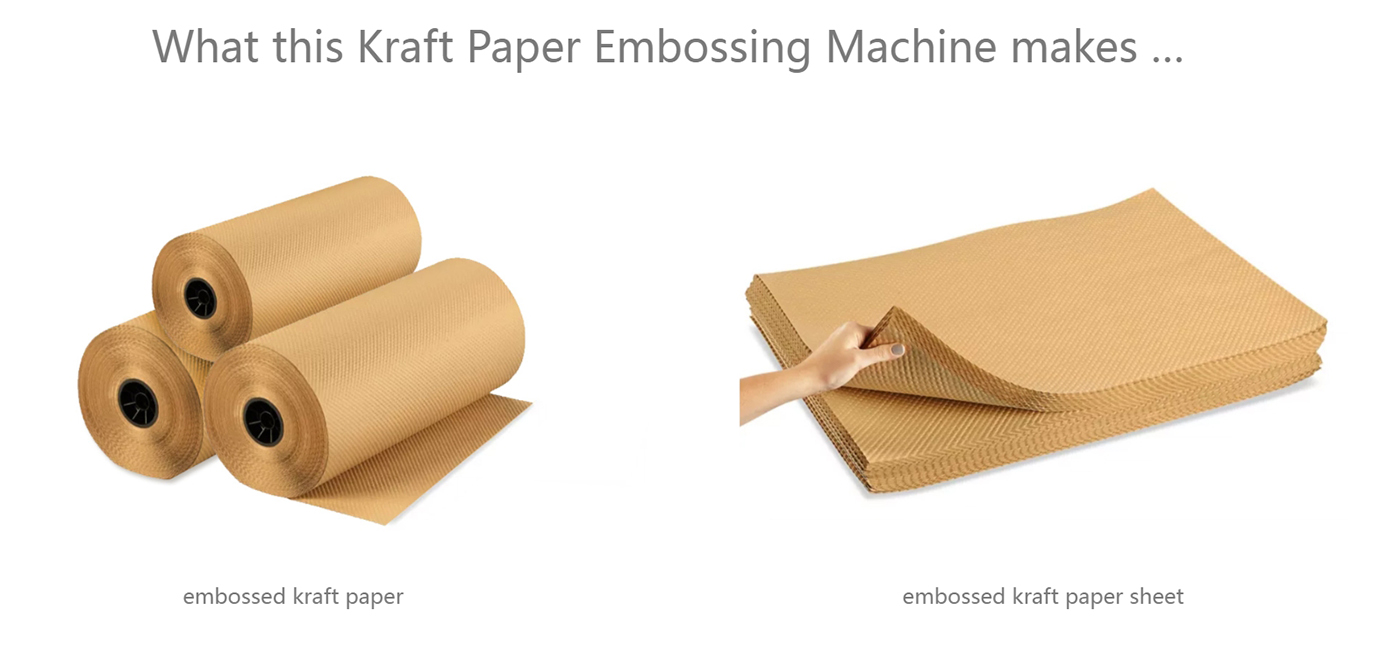
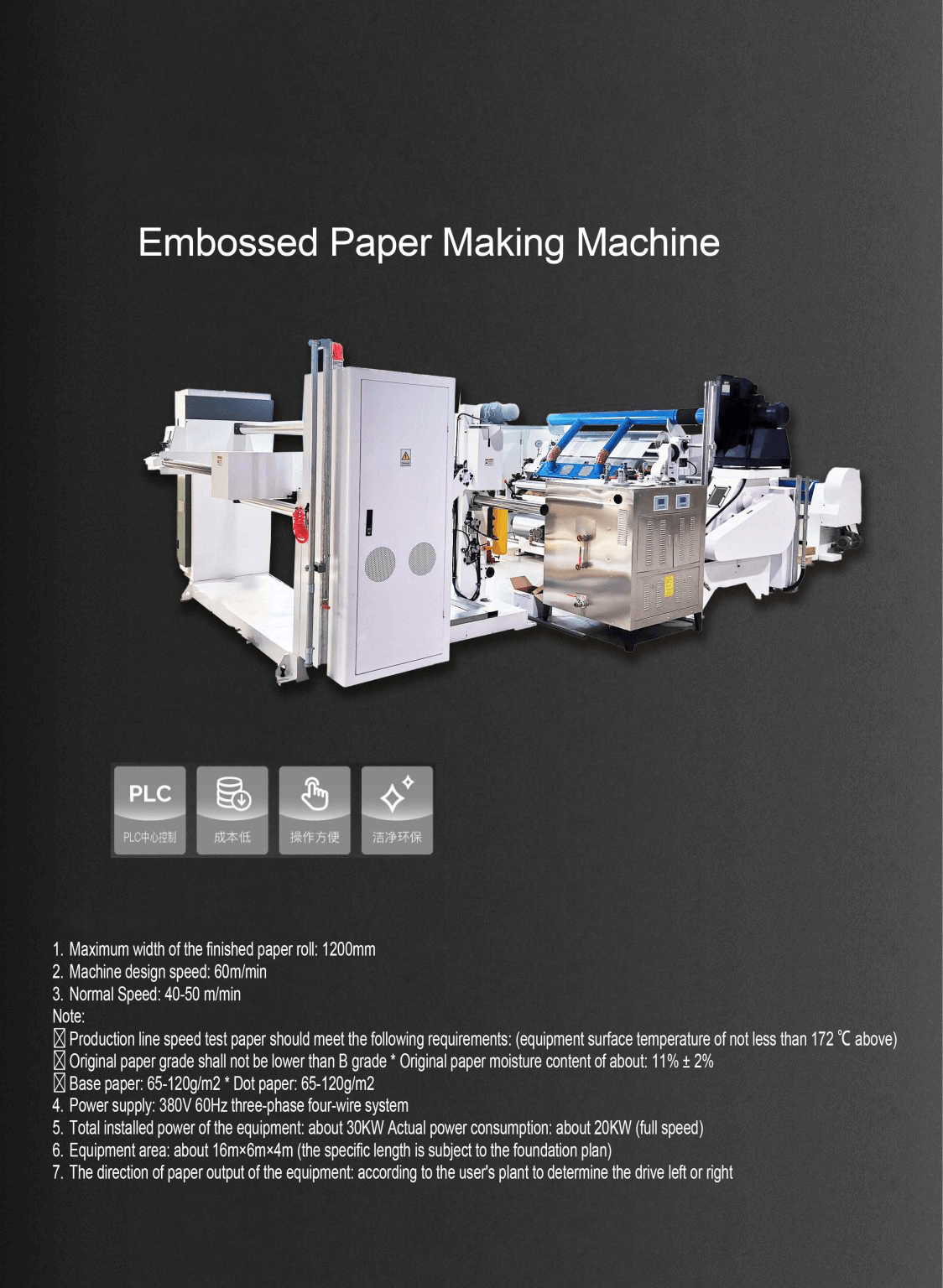
Our published kraft paper embossing machine description covers converting 1,200 mm wide kraft paper into embossed rolls. The illustrated equipment overview lists a design speed of 60 m/min and a normal running speed of 40–50 m/min. Steam heats and forms the three-dimensional pattern. The described options include backing-kraft lamination and additional slitting, cutting and rewinding units for retail rolls. The page identifies wrapping small items, void fill and material for padded mailers as applications. These details provide a starting point; the paper, finished-roll format and required configuration should be confirmed for each project.
Specify retail rolls around the packing workflow
A retail roll needs a practical relationship between paper width, length, core size and outside diameter. Define those values according to the user’s storage space and dispensing method. A roll intended for a compact packing bench may need a different format from one supplied for an industrial workstation.
Prepare samples in the proposed saleable format. Check whether the roll unwinds smoothly, whether its edges remain manageable and whether the user can separate the required length consistently. Evaluate threading and handling with the intended dispenser, where applicable. A flat paper sample can help compare texture, but it cannot reveal every issue associated with a finished roll.
For the converter, the specification should also cover roll alignment, winding firmness and the method used to verify length. Retain a reference roll so production and quality teams can compare later batches against an agreed example.
Embossed paper supplied for a padded mailer enters another manufacturing process. Its usable width, winding condition and bonding requirements should therefore be agreed with the bag-making team. A retail wrapping format is not automatically the right input for a mailer line.
Where backing-paper lamination is part of the proposed construction, evaluate the complete laminate in a trial. Check bonding consistency, flexibility during handling and behavior during subsequent folding and converting. Confirm the selected adhesive and process conditions with the equipment supplier.
Likewise, assess the proposed mailer construction and closure as a finished product. The embossing process alone does not establish that a particular bag-making line will accept the material. Equipment compatibility should be confirmed for the actual configuration and demonstrated using representative feedstock.
Test the pack as customers will use it
Application trials should reproduce the intended packing procedure. For wrapping, specify the paper length, number of layers and placement around the item. For void fill, document how the paper is placed and how much space remains within the outer package. This makes sample comparisons repeatable.
Use representative contents and the intended box or mailer. Define the acceptance criteria before testing, including item movement, visible damage and any surface marks relevant to the product. Include the handling and transport conditions expected in service. If a material or pack design changes, review whether the existing test results still apply.
Production trials and packaging trials answer different questions. The former establishes whether the line can make acceptable paper consistently; the latter evaluates the resulting pack. Record accepted output, defects and interruptions during production, alongside the separate results of the application evaluation.
To develop your specification, read our kraft paper embossing machine overview and contact US. Share your paper samples, target roll format and intended use so we can discuss the appropriate configuration and trial requirements.