



Honeycomb Paper Making Machine: What to Test Before Buying
2026-10-14 15:29Selecting a honeycomb paper making machine starts with a clear definition of the paper you want to sell. Packaging converters need a repeatable finished product, a practical production workflow and evidence from trials with their intended material. A structured sample evaluation helps turn a general equipment enquiry into a specification that suppliers can assess.
For businesses planning kraft honeycomb paper roll production, the following checks provide a useful starting point before comparing quotations.

1. Define the finished product
Prepare a reference sample or drawing showing the required paper width, roll length, core size and packaging format. State whether customers will expand the material by hand or use a dispensing system.
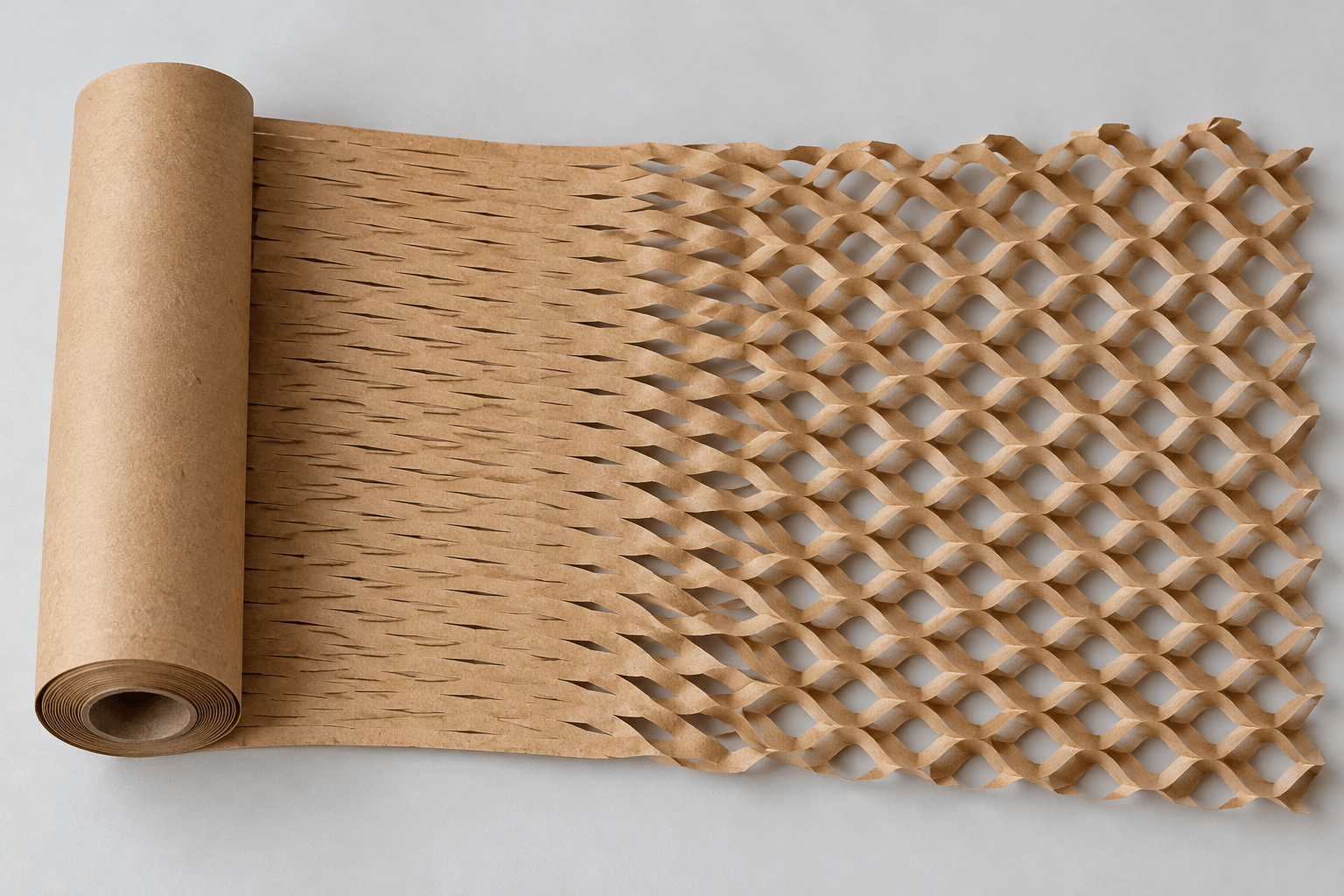
Honeycomb wrapping paper uses a die-cut pattern that opens into a three-dimensional structure during expansion. Include photographs of both the compact material and the expanded sample in your enquiry. This gives the equipment supplier a clearer picture of the required output and makes sample comparisons easier.
2. Use the paper you plan to purchase
Ask for a trial using the paper grade intended for commercial production. Record its supplier, basis weight, width and relevant material specifications. Where you expect to use several grades, agree which ones should be included in the trial.
Keep the trial conditions with each sample. A demonstration is easier to evaluate when you know which paper was used, which machine configuration produced it and how the operator prepared the run. Retain labelled samples for later comparison with delivered equipment.
3. Check cutting and expansion together
Inspect the compact sample for the agreed cutting pattern and visible defects. Then expand several sections from different points in the roll using a consistent method.
Observe whether the cells open evenly, whether tears develop and how easily the material wraps around a representative item. Record the results against agreed acceptance criteria. Avoid judging the whole roll from a single attractive section selected for a photograph.
4. Evaluate the finished roll
Check roll dimensions, winding appearance, core condition and the way the paper unwinds. Confirm how roll length will be measured and verified during production.
Include storage, handling and the customer's dispensing method in the evaluation. For example, ask the intended user to load and use a trial roll in the actual packing workflow. Document any adjustment needed before approving the finished format.
5. Run a representative packing trial
Use the proposed material with your customers' typical products and outer packaging. Record wrapping steps, material consumption and operator feedback.
Where transit protection is a purchasing requirement, arrange an appropriate test of the complete packed product. The paper sample, item, outer carton and packing method should all be documented. This creates evidence for the specific application being assessed rather than an assumption based on material appearance.
6. Compare usable production output
During the equipment trial, agree how to record running time, setup, stoppages, rejected material and finished rolls that meet the specification. Ask how operators check quality and which routine maintenance tasks need to be planned.
Use these observations when comparing an automatic honeycomb paper making machine with your production requirements. A quotation becomes more meaningful when its configuration is connected to a defined material, finished format and acceptance procedure.
Discuss your production requirements with Foundpak
Review our fully automatic honeycomb paper making machine as a starting point for an equipment discussion. Prepare your paper details, reference samples, required roll sizes, expected output and installation requirements.
Contact Foundpak to discuss the proposed configuration and request a quotation based on your production brief. Include the sample checks you want to complete so the enquiry can move toward a clear, reviewable purchasing decision.